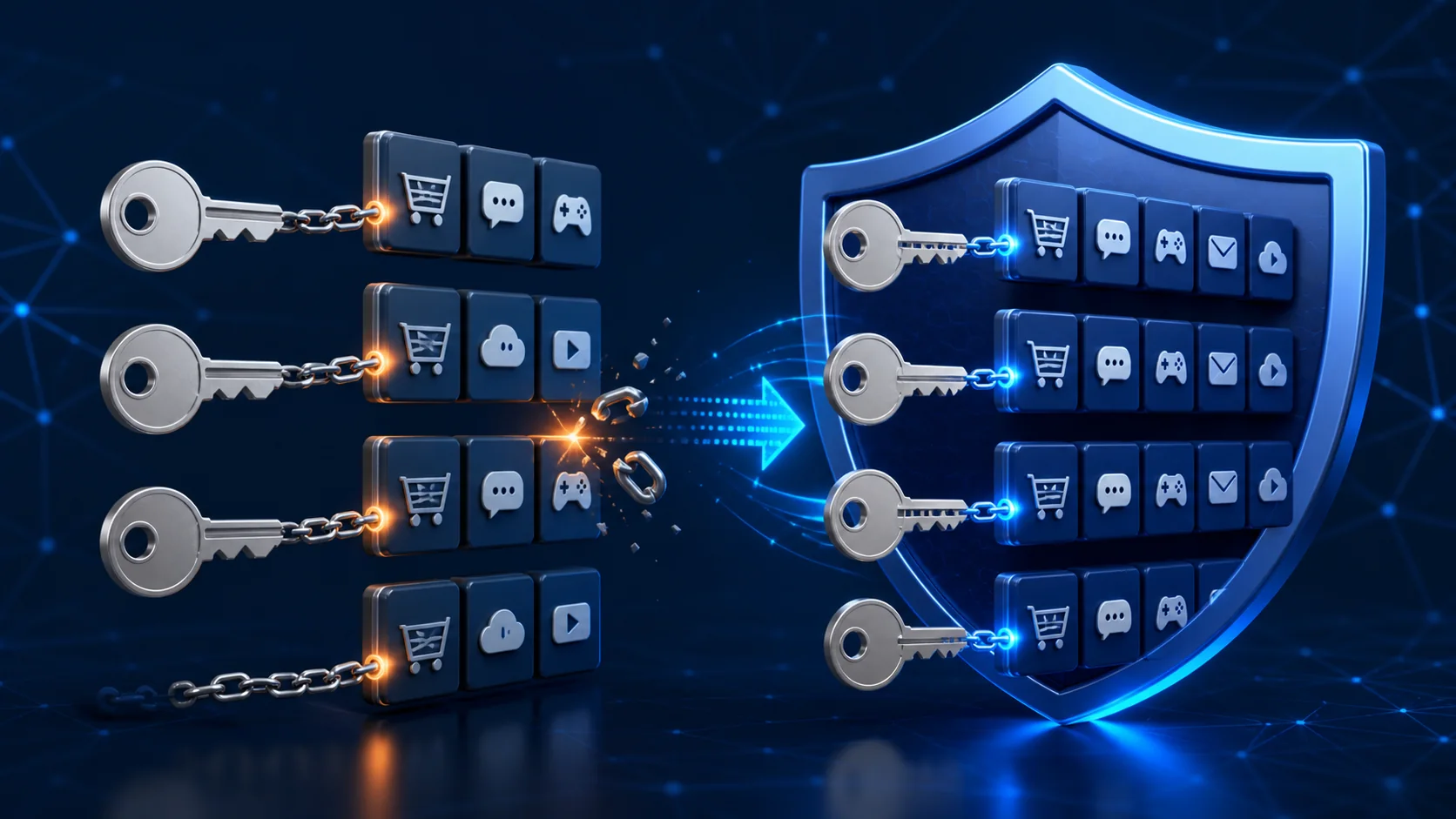
Most password problems begin with convenience: a short word, a reused favorite, or a password shared in an unsafe place. These choices reduce the work an attacker needs to do and can turn one exposed account into several compromised accounts.
Reusing the same password
Password reuse is one of the most damaging mistakes. When one website suffers a breach, criminals may test the leaked email-and-password pair on other services. Use a different password for every account, especially email, banking, cloud storage, and work systems.
Choosing personal or predictable details
Names, birthdays, phone numbers, teams, and pet names may be easy to remember, but they are often easy to discover. Keyboard patterns such as consecutive keys and common words with a final number are also widely tested. Replacing a letter with a similar-looking symbol does not make a common word unpredictable.
Create a longer random value with the Tolibox password generator, or build a private passphrase from unrelated words. Do not copy examples from a public article.
Sharing and storing passwords carelessly
Avoid sending passwords through ordinary chat or email. Do not leave them in an unprotected spreadsheet, browser note, or paper visible near your device. Use a trusted password manager, lock your devices, and keep recovery methods current.
Another mistake is approving unexpected sign-in prompts. Multi-factor authentication helps, but only if you reject requests you did not initiate.
Trusting appearance instead of checking
A password can look complicated while following a familiar pattern. Use the Tolibox password strength checker for a quick local review, then ask two more questions: Is it unique? Is it stored safely?
What should I change first?
Start with your primary email because it can often reset other accounts. Then update financial, work, shopping, and social accounts that reuse the same password.
What if a password appears in a breach?
Change it immediately everywhere it was used, review recent account activity, sign out unknown sessions, and enable multi-factor authentication.